How to Store Garden Furniture in Winter

The short answer: clean your garden furniture, let it dry completely, then keep it somewhere dry, such as a shed or garage. If it has to stay outside, a well-fitted cover and a spot off wet ground will help it through to spring.

How much care each piece needs depends on what it is made from. The RHS says hardwood and plastic furniture are less likely to need maintenance, while softwood, and steel or iron, need a little more care. Cushions are a job of their own.

This guide is for anyone packing away a patio set, bench or loungers for the colder months. It covers when to do it, how to get furniture ready, how to store each material, what to do with cushions, and how to manage if you have no space indoors. If you need somewhere to put everything, our garden storage range includes storage boxes and sheds.

When should you put garden furniture away for winter?

The RHS advises doing any maintenance and storing at the end of the summer season, in dry weather. In practice, that means choosing a dry spell in autumn, before the weather turns wet and cold for good.

The dry weather matters. You want furniture to go into storage, or under a cover, dry, and that is much easier after a few days without rain.

You don't have to clear the patio in one go. If you still sit out on bright autumn afternoons, put the cushions away first, then the frames once you've finished with them for the year.

How to get garden furniture ready for winter storage

A little work now means less to sort out when you bring everything back out. Work through these four steps on a dry day.

1. Clean it

Brush off leaves and dirt, then wash the furniture with warm soapy water and a soft brush or cloth. The RHS suggests soap and water for plastic furniture, and a brush and soapy water once a year for hardwood. Get into the corners, joints and, on rattan, the weave, where dirt collects.

2. Let it dry completely

Leave everything to dry in the open air. Check the undersides, the feet and any gaps in the weave, as these stay damp longest. Don't cover or store anything until it is dry to the touch all over.

3. Check for damage and fix it now

Look for loose screws and fittings, splits in wood and spots of rust. The RHS notes that rust can appear on plastic-coated metal furniture where the plastic has cracked. Its October advice is to mend broken or rotted pieces of wood in slatted garden furniture. Small repairs are easier now than after a winter of wet weather.

4. Take off the cushions

Cushions and seat pads need storing separately (see below). Take them off before you cover or move the frames.
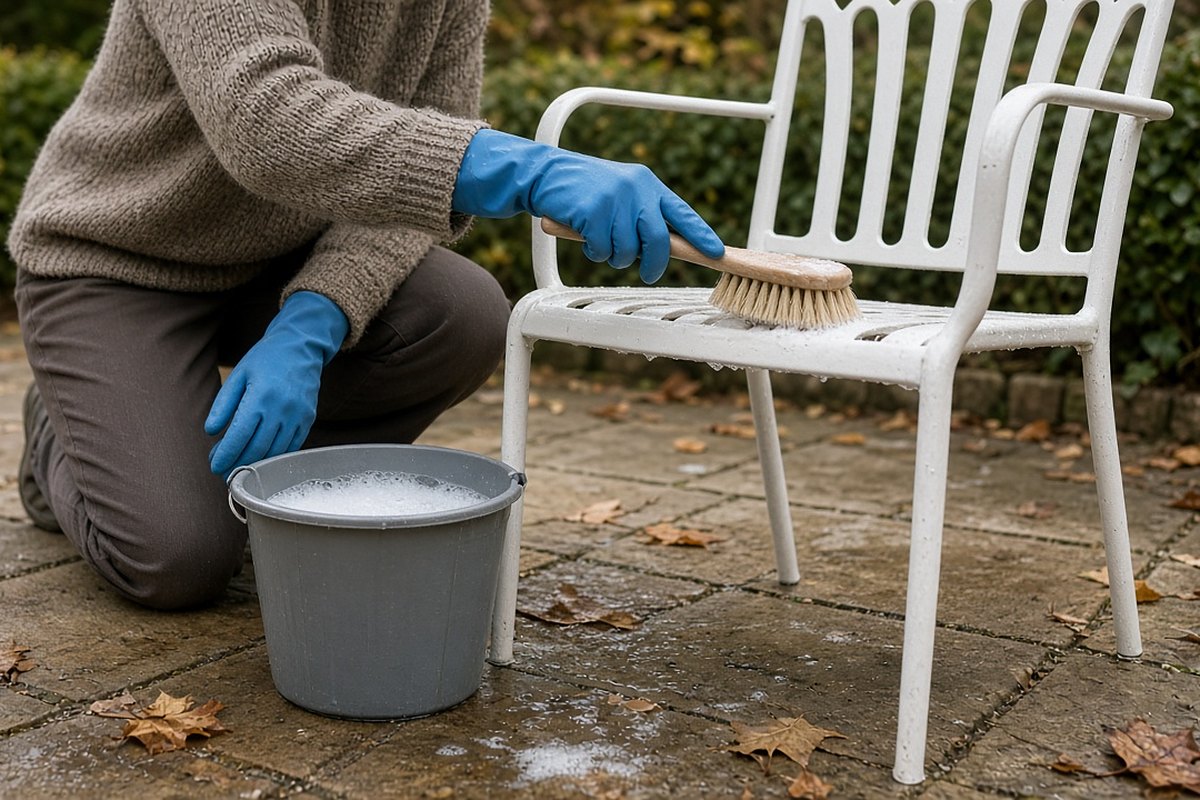
A person in rubber gloves scrubbing a white metal garden chair with a brush, next to a bucket of soapy water

How to store garden furniture by material

Each material needs slightly different care. This table sums up what the RHS and Which? say, with more detail below.

Material Over winter Before you store it
Synthetic rattan Can be left outside all year, but store it away or cover it in extreme weather (Which?) Clean with soapy water (Which?) and let it dry
Natural rattan or wicker Ideally shouldn't be left outside (Which?) Clean the grooves with a brush and store it away (Which?)
Hardwood, such as teak Can be left out over winter if space under cover is short (RHS) Wash with a brush and soapy water once a year (RHS)
Softwood, such as pine Needs more care than hardwood (RHS) Wash down and treat with a wood stain or paint containing preservative, in dry weather (RHS)
Metal Steel and iron can rust if the coating is damaged; aluminium doesn't rust Clean and cover all metal; on steel and iron, treat any rust with rust-preventing paint and oil the joints (RHS)
Plastic Can become brittle if left out over winter (RHS) Clean with soap and water, then store in a garage or shed if you can (RHS)

Rattan furniture

First, check whether your rattan is synthetic or natural. The product description usually says, and synthetic rattan is sometimes listed as PE rattan or PE wicker (PE is polyethylene, a type of plastic).

Which? says synthetic rattan can be left outside all year round, but it is better stored away or covered in extreme weather. Natural wicker ideally shouldn't be left outside at all. If you have the space, bring either type into a shed or garage. If not, cover synthetic rattan once it is clean and dry.

Wooden furniture

Hardwoods such as teak contain natural oils, which the RHS says makes them weather resistant and able to be left out over winter if you are short of covered space. Tilting the furniture and keeping the feet off wet ground can help prevent rotting. A heavy-duty, water-resistant cover, such as our 600D Oxford fabric furniture covers, will keep out the worst of the winter weather.

Softwood, such as pine, needs more attention. The RHS recommends washing it down with a wood-cleaning product and treating it with a wood stain or paint containing preservative, ideally once a year, in dry weather. Follow the instructions on the product you use, and pay attention to flat surfaces and any parts that sit in water or touch damp soil.

Metal furniture

Clean metal furniture before you put it away. Steel and iron frames can rust where the paint or coating is chipped or damaged, so check them closely. The RHS advises removing loose material from any damaged areas and treating them with rust-preventing paint. Joints and fixings may need a little oil so they keep moving freely. For painted steel and iron, the RHS also suggests repainting every two to three years to keep the barrier against the weather in good order.

Aluminium doesn't rust, but it still benefits from a clean and a cover so dirt and damp don't sit on it all winter.

Plastic furniture

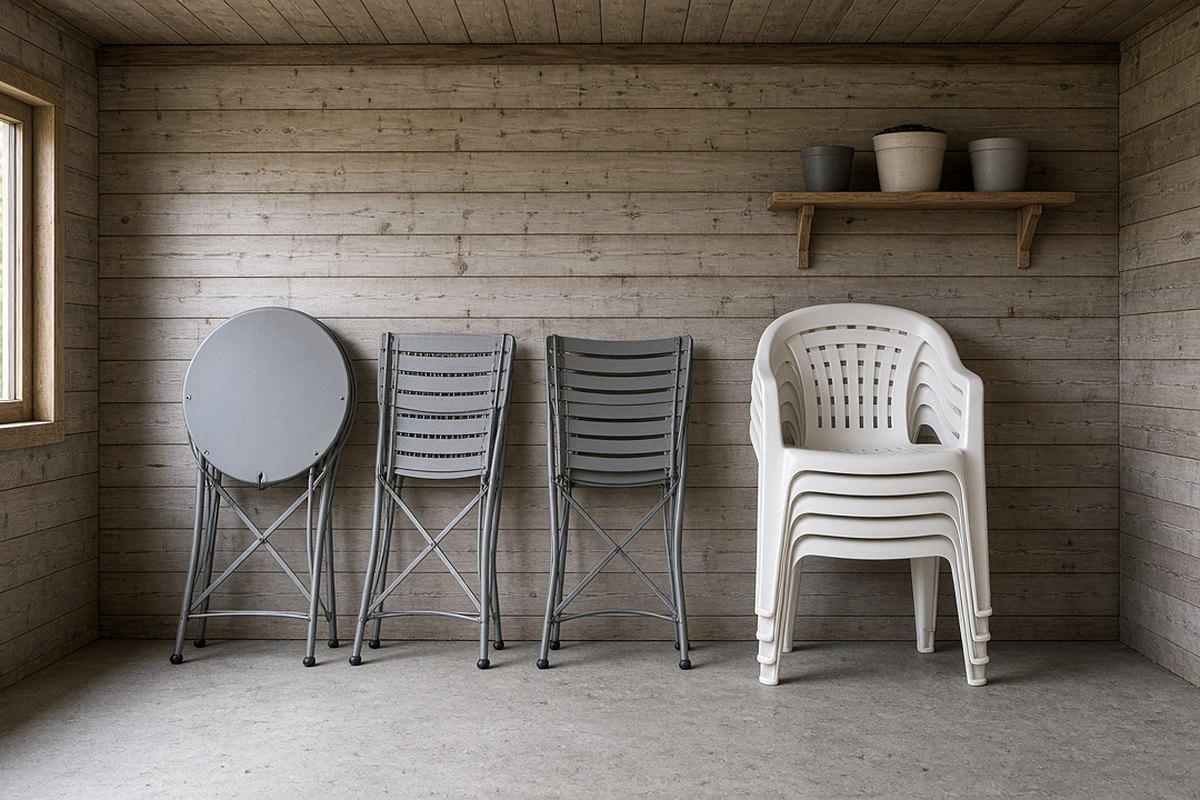
Plastic is easy to look after: clean it with soap and water and let it dry. The RHS warns that plastic furniture left out over winter, or in strong sunshine, can become brittle over time. It suggests storing it at the back of the garage or in a garden shed if you have space. Stacking chairs take up very little room.

A folded grey metal bistro table and chairs next to stacked white plastic chairs against a garden shed wall

Fold or stack chairs to free up room in a shed or garage.

How to store garden furniture cushions in winter

Cushions need extra care in a wet UK winter. Which? says most cushions are better taken inside in cold or wet weather, to avoid mould and mildew.

Clean and dry them first

Brush off dirt and check the care label before washing any removable covers. Then let the cushions dry fully, ideally indoors, before you pack them away. A cushion that feels dry on the outside can still be damp in the middle, so give it time.

Keep them somewhere dry indoors

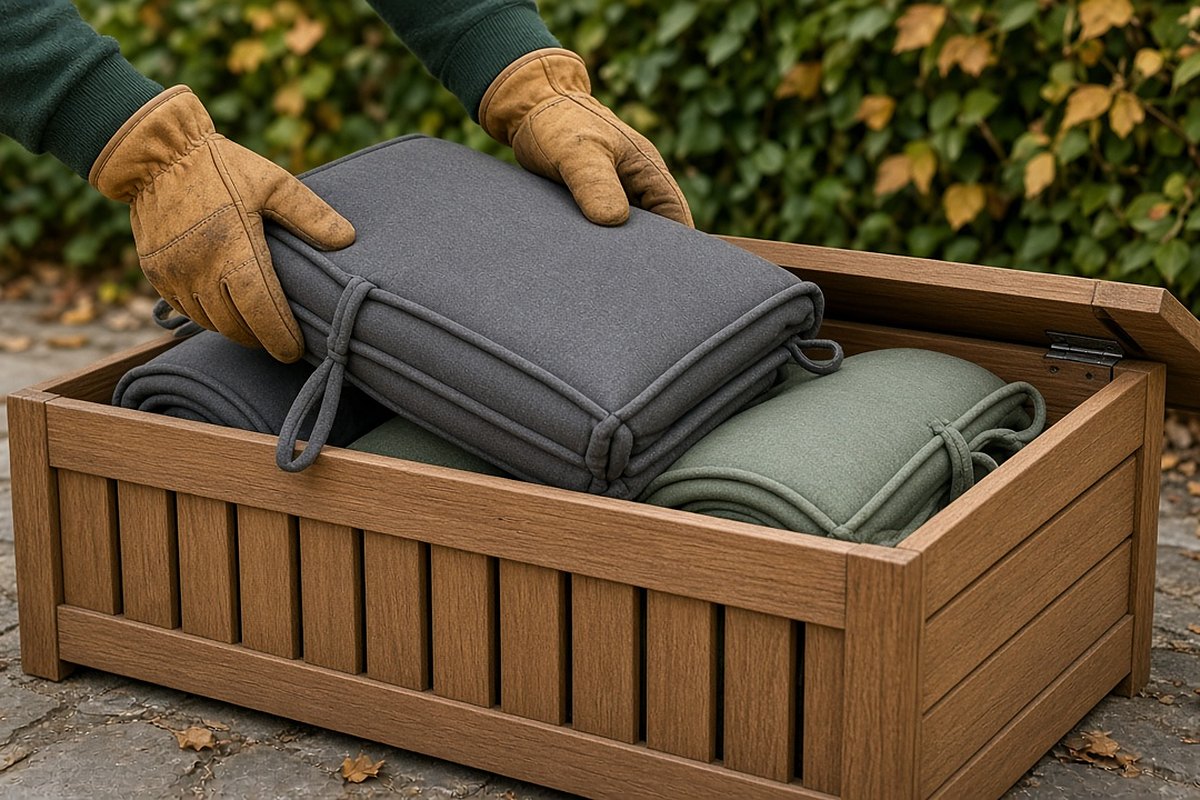
A dry cupboard, spare room or dry garage all work. Keep cushions off the floor and avoid squashing heavy items on top of them, so they keep their shape.

Use a garden storage box if space is short

If indoor space is tight, a storage box keeps cushions together, off the ground and out of the way. Our listings say how each box handles wet weather. For example, the Lumen 180L Outdoor Storage Box lists a "Waterproof Inner Bag", and the Oasis 292L Outdoor Storage Box lists a "Water-Resistant Finish". Whatever you choose, make sure the cushions are dry before they go in.

Our garden storage boxes come in wood, rattan and plastic, so you can match one to your patio.

Seat cushions being placed into an open wooden outdoor storage box on a patio

How to store garden furniture outside under a cover

Not everyone has a shed or garage with room to spare. If your furniture has to stay outside, a cover and a little planning will help.

Choose a cover that fits

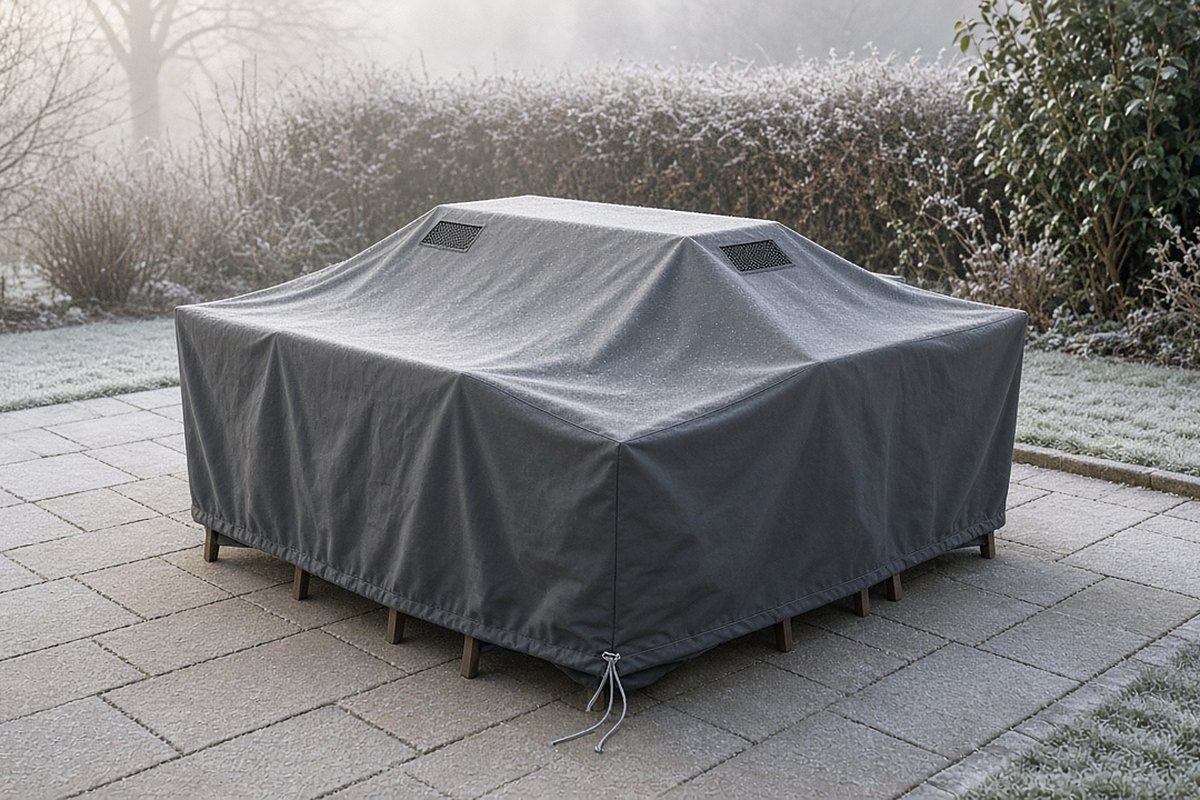
A cover should fit the piece it is protecting, without being so loose that it catches the wind. Measure your furniture and compare it with the sizes on each listing. Our cover listings give the dimensions in the product name, for example the Oxford Fabric Outdoor Furniture Cover - W192cm x D205cm x H61cm, which lists "600D Oxford Fabric", "Water & UV Resistant" and "Pull Cord Fastening". (In 600D, the D stands for denier, a measure of how thick the threads are.)

If you want to know more about the material, our post on why we use Oxford fabric for garden furniture covers explains it. You can see the full range of furniture covers, including covers for sets, sun loungers and single chairs.

Keep it off wet ground

Stand furniture on a patio or hard surface rather than on the lawn if you can. The RHS says tilting furniture and keeping the feet off wet ground can help prevent rotting, especially for wooden pieces.

Group pieces together

Push chairs in under the table or stack them, then cover the group. Tighten any pull cords or straps so the cover stays put in strong wind.

Check it through the winter

Every few weeks, and after storms, have a look. Clear fallen leaves, tip off any standing water and refit the cover if it has slipped. On a dry day, lifting the cover briefly lets you check the furniture underneath.

For more on why covering is worth doing all year, read why you should cover your patio furniture.

A patio dining set under a fitted grey furniture cover with air vents and a drawcord on a frosty patio

Where to store garden furniture if you have no garage

The RHS advises storing garden furniture in a garage or shed if you can, to keep it dry and prolong its life. If you have no garage, or your shed is already full, there are still options.

Make room in the shed you have

Clear out anything you no longer need, then put large items, such as tables, at the back. Fold or stack chairs. If a table top lifts off, stand it on its edge against a wall, secured so it can't tip, to use less floor space. Leave a gap so you can reach and check the furniture during the winter.

Think about a garden shed for next year

If you find yourself short of space every autumn, a shed gives you somewhere dry for furniture, cushions and garden tools. You can filter our garden sheds by material and size to find one that suits your garden.

Use covers and boxes together

If a shed isn't an option, combine the two approaches above. Keep cushions in a storage box or indoors, and keep frames covered on a hard surface off wet ground.

Final thoughts

Storing garden furniture in winter comes down to a few habits:

  • Do it in a dry spell at the end of the season.
  • Clean everything, let it dry completely and fix any damage.
  • Store furniture in a shed or garage if you can, and follow the advice for its material.
  • Bring cushions indoors, or keep them dry in a storage box.
  • If furniture stays outside, use a cover that fits, keep it off wet ground and check it through the winter.

Spend an afternoon on it now and your furniture will be ready to use when the warmer weather comes back.

See our furniture covers for sets and single pieces, and find the right fit for your furniture.

Cookies in GardenFurnitureSets

We use cookies to give you the best experience with us and track our marketing. You are free to manage cookies via your browser settings at any time (Allow/Remove). By continuing to use the site you confirm are happy with our privacy policy.